Location – Makerere University Biological Field Station (MUBFS) – Kanyawara site in Uganda
Date – 10th March, 2025
I had the opportunity of participating in bird population monitoring yet again at Makerere University Biological Field Station in Fort Portal, Uganda. Makerere University Biological Field Station is a research facility located on the edge of the northern section of Kibale National Park.
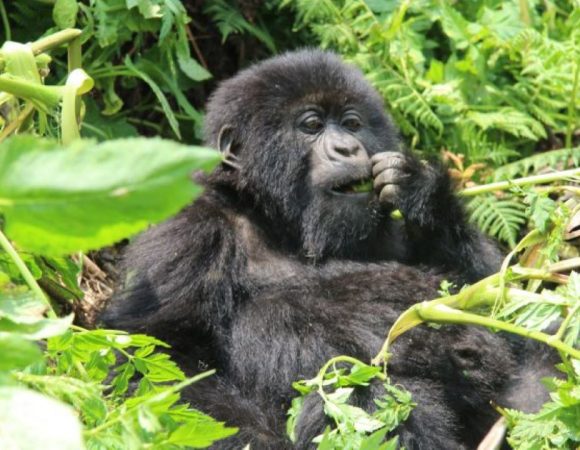
Kibale National Park is one of Uganda’s most bio-diverse national park and is known as the “primate capital of the world”. 13 primate species have been recorded at the park with the most sought after primate being the chimpanzees. Kibale National Park is the best place for chimpanzee trekking in Uganda and offers chance to spend an hour face to face with these active and amazing primates.
Aside from chimpanzees, Kibale National Park is a popular birding site and it was the perfect choice for us to do Bird Population Monitoring on this day. About 375 species of birds have been recorded at Kibale National Park with the most sought after bird being the Green-breasted Pitta.
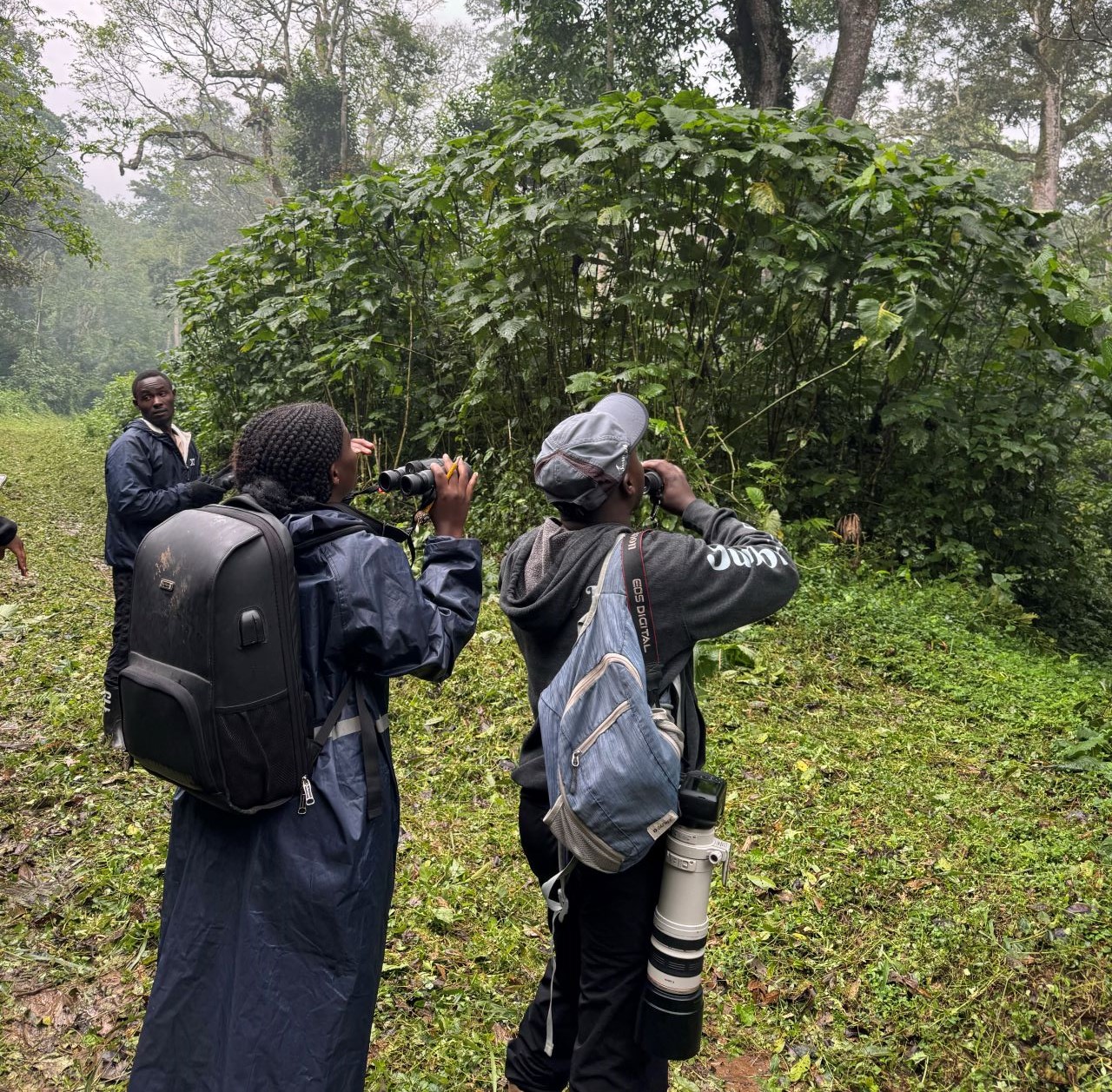
We started the Bird Population Monitoring exercise on this day at the Kanyawara site compound and went into the Kibale Forest towards the Ngogo Nature Trail. The biological field station has two research centres that is Kanyawara and Ngogo. We were a team of 6 including our ranger guide and we were led by Robert Bagonza from Sunbird Hill Uganda which is a nature monitoring and re-wilding site situated on the edge of Kibale Forest.
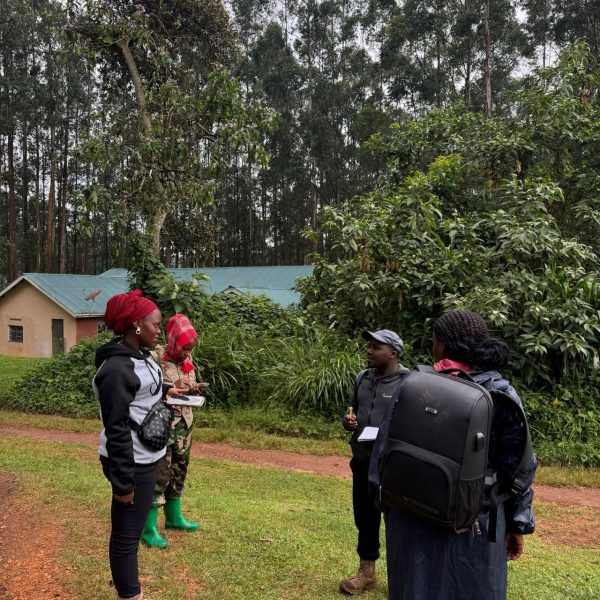
Briefing at the Kanyawara site before starting the exercise
We always bird together both inside Kibale National Park and at Bigodi Wetland Sanctuary in Bigodi so there was no need for introductions, just familiar greetings as usual. Bird Population Monitoring is important in the conservation of birds and I am always honoured to participate in the exercise. The activity involves tracking the number of birds in an area and is an international programme that focuses on common bird species with the main goal of monitoring trends in the population of bird species that are thought to be common in certain areas. The scheme has been running in Uganda since 2009 and Uganda is one of the pioneer countries for the Bird Population Monitoring Scheme.
The exercise is different from birding as the main focus during the activity is collection of data. The data collected informs conservation action and provides information on birds in the area. The data is also important for education and research.
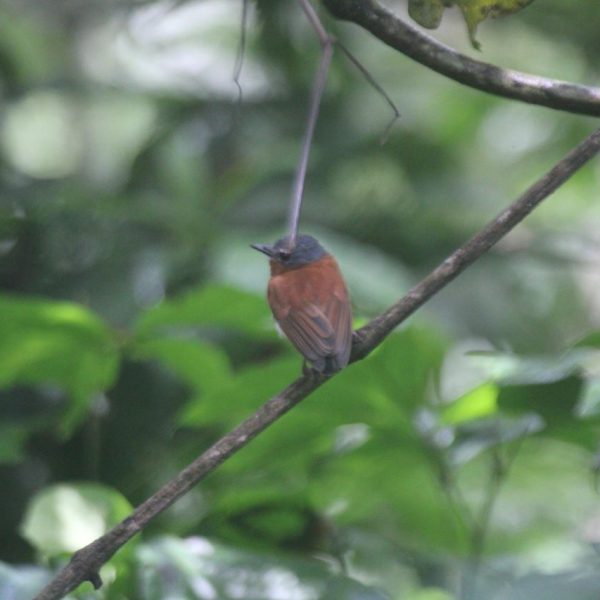
A Chestnut Wattle-eye. One of the birds that we saw and counted during Bird Population Monitoring.
The birds in Kibale National Park that we counted and looked for during the Bird Population Monitoring exercise on this day included;
Afep Pigeon
Red-eyed Dove
Black-billed Turaco
African Emerald Cuckoo
Red-chested Cuckoo
White-rumped Swift
Speckled Mousebird
Narina Trogon
White-headed Woodhoopoe
Black-and-white-casqued Hornbill
African Pygmy Kingfisher
Speckled Tinkerbird
Yellow-throated Tinkerbird
Yellow-rumped Tinkerbird
Yellow-spotted Barbet
Lesser Honeyguide
Golden-crowned Woodpecker
Western Black-headed Oriole
Chestnut Wattle-eye
Jameson’s Wattle-eye
African Shrike-flycatcher
Northern Puffback
Luhder’s Bushrike
Black-headed Paradise-Flycatcher
African Blue Flycatcher
Western Nicator
White-chinned Prinia
Green-backed Camaroptera
Olive-green Camaroptera
Masked Apalis
Buff-throated Apalis
Black-faced Rufous-Warbler
Angola Swallow
Lesser Striped Swallow
Slender-billed Greenbul
Red-tailed Bristlebill
Joyful Greenbul
Little Greenbul
Toro Olive-Greenbul
Willow Warbler
Green Hylia
Scaly-breasted Illadopsis
Purple-headed Starling
Rufous Flycatcher-Thrush
Red-tailed Ant-Thrush
African Dusky Flycatcher
Gray-throated Tit-Flycatcher
Ashy Flycatcher
Red-capped Robin-Chat
Snowy-crowned Robin-Chat
Gray-chinned Sunbird
Blue-throated Brown Sunbird
Olive Sunbird
Red-headed Malimbe
Black-necked Weaver
Grosbeak Weaver
White-breasted Nigrita
Pin-tailed Whydah
Northern Gray-headed Sparrow
African Pied Wagtail
The above are the bird species that we were able to count on this day. Some we saw and other we heard calls. My ebird checklist came to 64 species. The method of collection that we were using on this day was the line transect method where we counted birds along a line transect, so for every set meters we would stop and start another track.
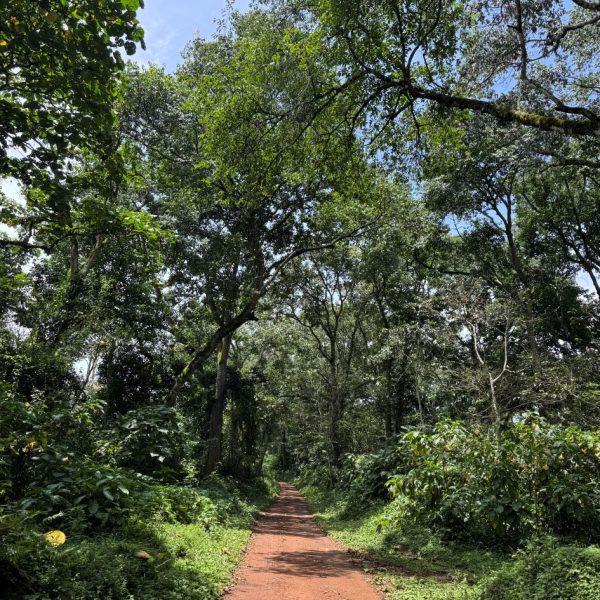
The forest trail that we used while doing Bird Population Monitoring
My highlights of the day were;
- Seeing a lifer – White-headed Woodhoopoe. We saw 3 of them perched on top of a dry tree branch.
- Participation in the Bird Population Monitoring with my fellow bird enthusiasts.
- Seeing the Narina Trogon. This is one of my favorite birds and I am always excited each time I see it.
- Seeing Bush bucks in the field station’s compound on arrival. Such a nice surprise!
- Seeing the Joyful Greenbul as we ended the day.
I was happy and glad to participate in this activity, the day started with some rains but we still went on with the monitoring. Rain is sometimes part of the experience while birding in Uganda so it never deters us. The beauty of Uganda’s weather is that by the end of the exercise, it was shining. The sun was out and bright. This was yet another day well spent in Kibale National Park.
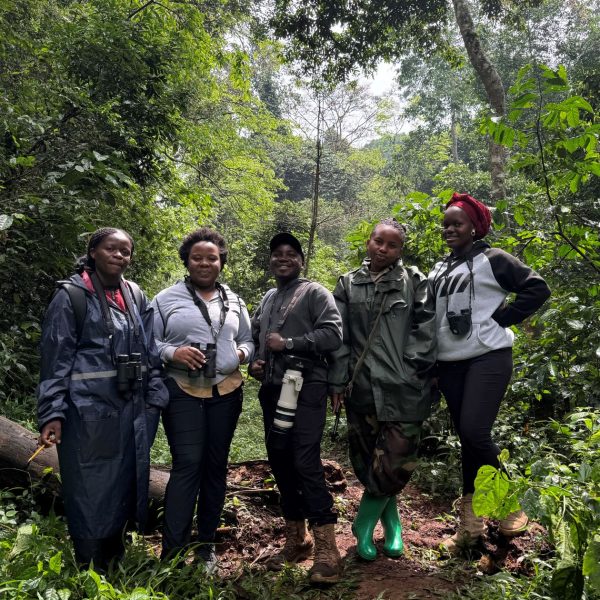
The team that participated in Bird Population Monitoring on this day.
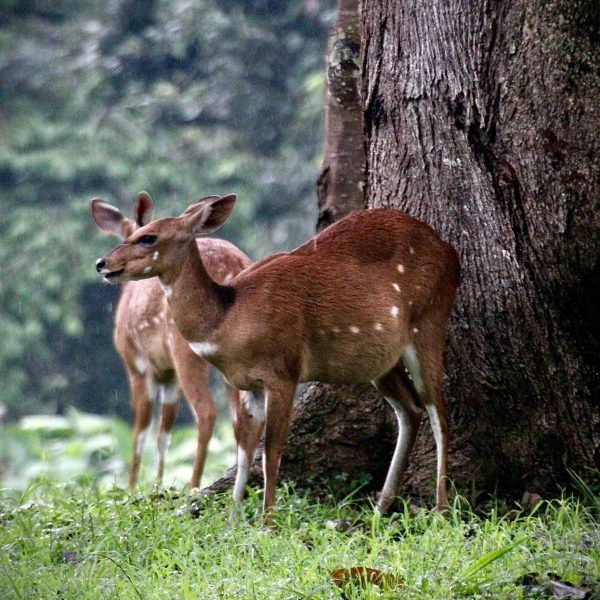
Bushbucks seen in the field station’s compound on arrival

Me (Rita Amanyire founder of 56Africa Tours, a tour company based in Uganda) at the field station on this day
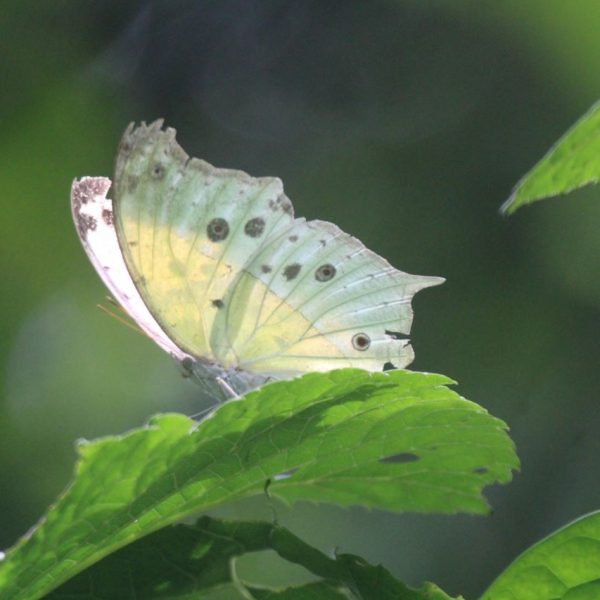
Forest Mother of Pearl butterfly that we saw in Kibale Forest while doing Bird Population Monitoring on this day