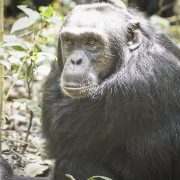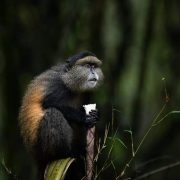
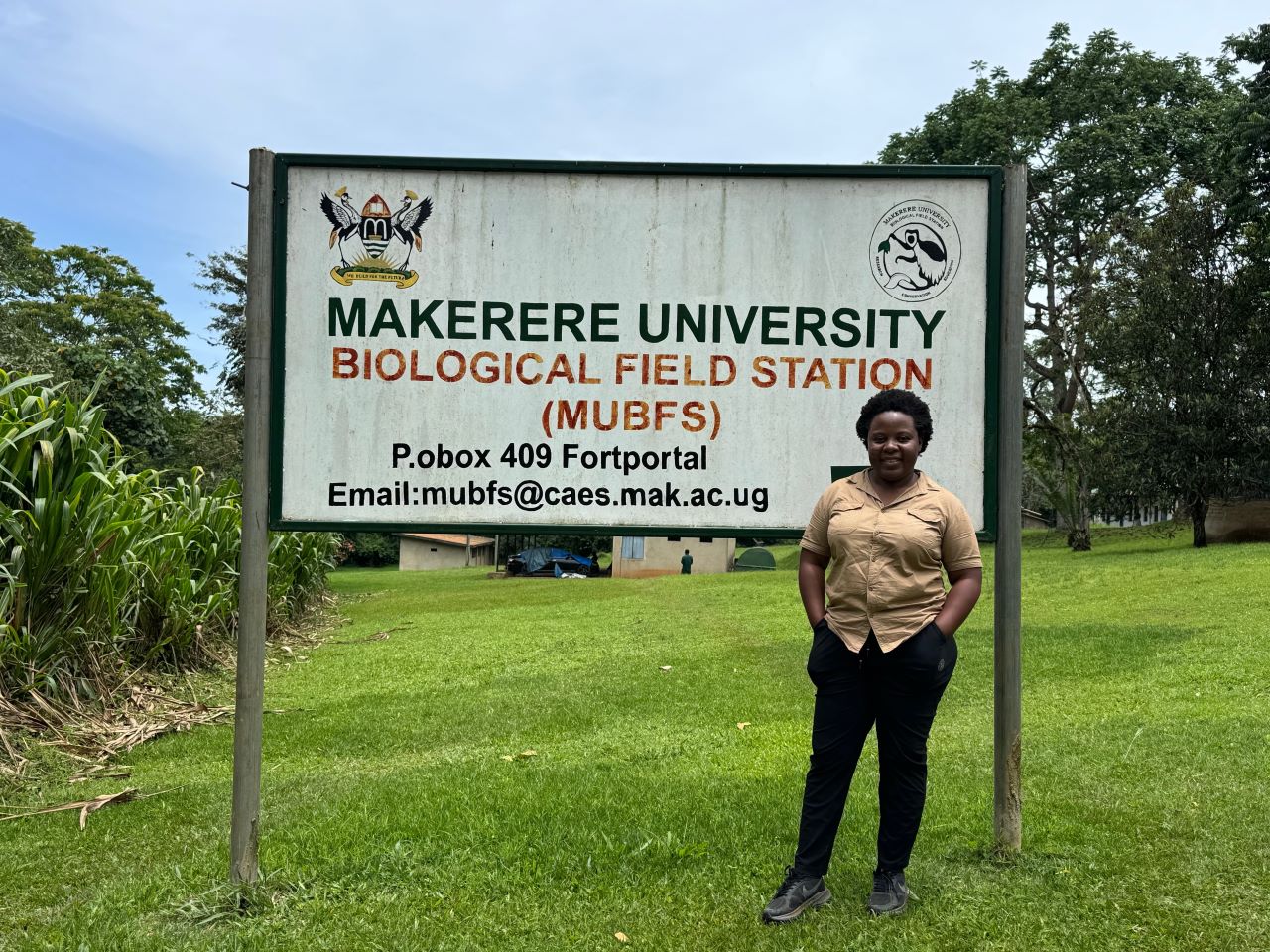
Located in the northern part of Kibale National Park is the Makerere University Biological Field Station, a key center for education, research and conservation in Uganda. Kibale National Park is one of Uganda’s bio-diverse national parks situated in western Uganda and is also commonly referred to as the “primate capital of the world”. 13 primate species have been recorded at the park with the most sought after primate being the chimpanzees making it the best place to see the chimpanzees in Uganda. 375 bird species have been recorded at the park and an estimate of 229 tree species are found in Kibale National Park. The park also hosts a variety of flowering plant species. It is therefore no wonder that a biological field station is located in Kibale National Park because it provides the right environment for research and training.
The Makerere University Biological Field Station abbreviated as MUBFS started out as a small primate research facility in 1970, after some years the research station became affiliated with Makerere University in Uganda which is one of Africa’s top education institutions.
The field station has over the past years been a hub for training and research for university students from Makerere University, researchers from around the world and trainees. The research station offers outstanding research in biological, physical and social sciences. Trainees and researchers are involved in key research projects like Bird Population Monitoring, plant research, community research and other multidisciplinary research activities.
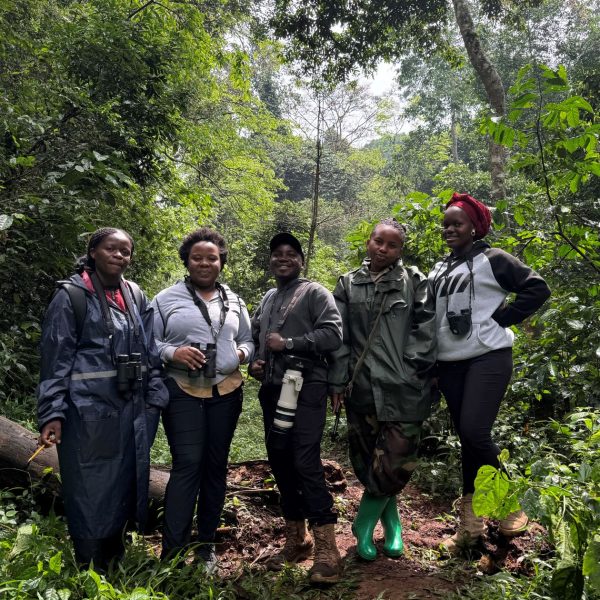
Trainees, a ranger guide and researchers at Makerere University Biological Field Station
Key facilities to support research are available at Makerere University Biological Field Station. The facilities include accommodation facilities, a kitchen, lecture hall, administrative offices that belong to Uganda Wildlife Authority and Makerere University, computer access, a library and Wi-Fi.
The best thing about the research station is the presence of accommodation which means that researchers and trainees can be accommodated throughout the year and hence have enough time to concentrate on their research. The kitchen at the field station also comes in handy as researchers and trainees can choose to make their own meals or reach out to community cooks in the nearby villages who can come to the station kitchen and make them their meals. One can purchase food from the markets in Fort Portal, which is approximately 20km away from the field station. Fort Portal is also good for weekly and monthly shopping as the town has supermarkets like Andrew & Brothers Supermarket and other places to shop in Fort Portal for groceries and dry food.
Makerere University Biological Field Station (MUBFS) Centers
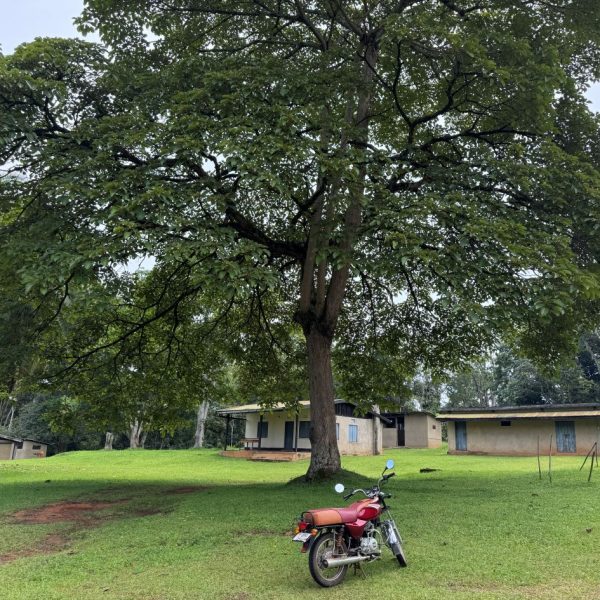
The field station has two main research centers named Kanyawara and Ngogo.
The Kanywara site is the most known site and is the first site that you encounter on arrival. The Kanyawara site is dotted with large beautiful trees and a well-maintained compound. The Kanyawara site’s compound receives occasional wildlife from Kibale National Park so on some days you might see wildlife like Bushbucks and Olive Baboons in the gardens. The trees in the compound also welcome the Black-and-white Colobus monkeys once in a while. The site is therefore a great center for conservation.
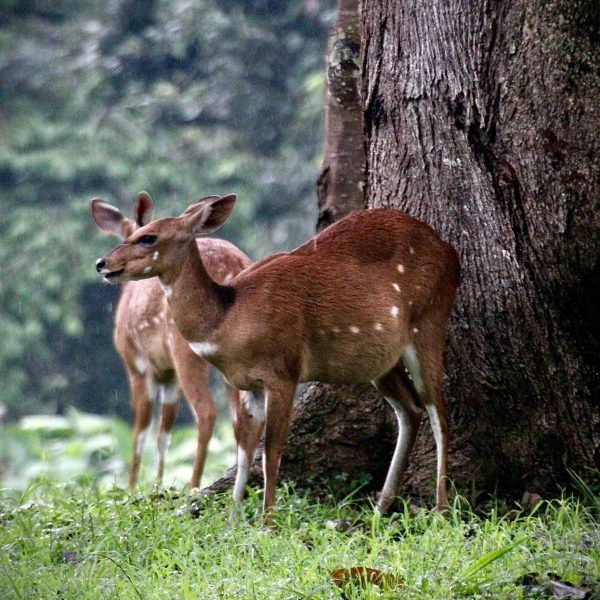
Bushbucks seen in the compound of Makerere University Biological Field Station
The Kanyawara site hosts the main facilities that includes the classrooms, administrative offices, the laboratory, accommodation facilities, a health unit and the lecture hall among others. This site also has the MUBFS library where one can find a number of books about wildlife of Kibale, the national park and other biological books. The library also has a collection of past research that was done at Makerere University Biological Field Station.
The Ngogo site is the second center and is located a four-hour hike away from Kanyawara. The research use at Ngogo is limited and the site has less facilities than the Kanyawara site.
MUBFS maintains forest trails at the two research centers and in total the field station maintains 200km of trails.
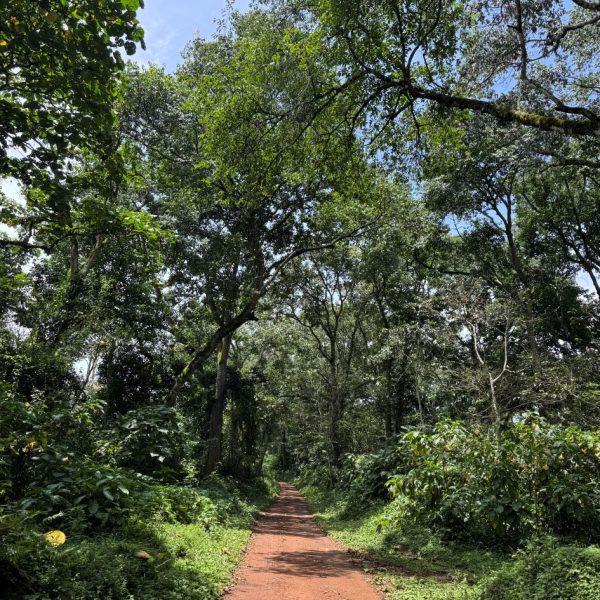
One of the forest trails at Makerere University Biological Field Station
Makerere University Biological Field Station Location
The biological field station is located in Kibale National Park in western Uganda. The nearest cities or towns to the station are Fort Portal City and Kamwenge town. The station is located 20km from Fort Portal and the drive from Fort Portal to MUBFS can take about 30 minutes.
If one is arriving at Entebbe International Airport, they have to prepare for another journey by road from Entebbe to the Kanyawara site for Makerere University Biological Field Station. The journey by road can take between 5-6 hours excluding stopovers along the way. You can hire a car on arrival or reach out to a tour operator in advance for car hire service.